
Published November 2, 2026
Your sample room holds 300 products, and every sales manager has a favorite for Amazon. The best-selling B2B item usually wins the argument, because it already ships by the container and everyone knows its cost to the cent.
Following that instinct is how many first launches go wrong. The products you should sell on Amazon US first are the few that combine real US demand, a gap the top sellers leave open, a price that still earns after every fee, and a size that ships cheaply. Your first shipment decides whether your board believes in the channel, so the choice deserves a morning with the numbers rather than a vote.
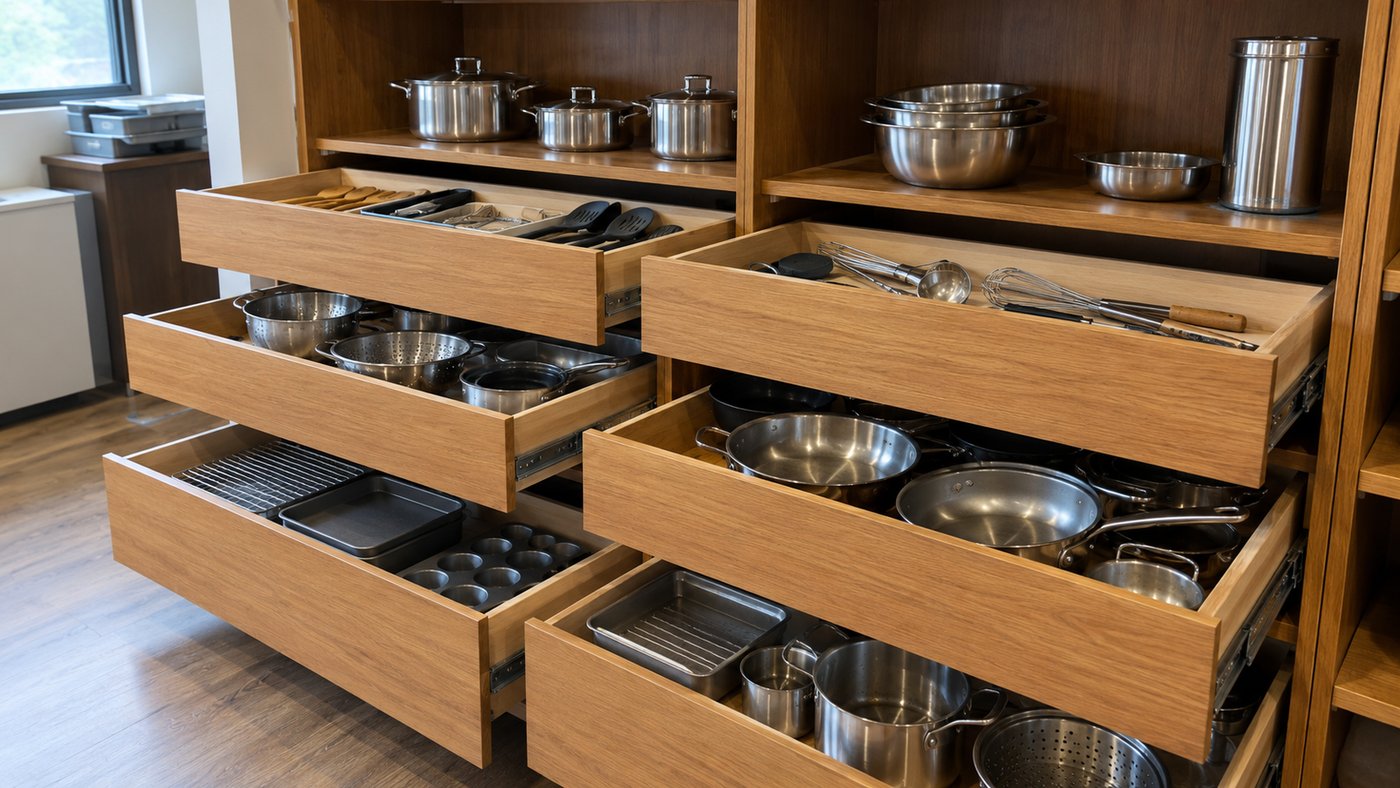
The products a manufacturer should sell on Amazon US first are the ones where US demand already exists, the current top sellers leave something unsolved, and the price shoppers pay leaves you a margin after fees and freight. That's rarely the same list as your best B2B sellers, because your buyers chose those for their shelves and their own margins, and Amazon shoppers judge your product on very different terms.
If you skip this step, you'll be in familiar company. When Tuoi Tre News asked Vietnamese firms about selling on Amazon in June 2024, Nguyen Dung, who founded a community of Vietnamese Amazon merchants and runs 5MSTAR E-commerce, blamed much of the trouble on inexperience and on firms that never researched what customers want, the paper reported. The other ways a first launch goes wrong, and how to recover, are in how to restart an Amazon US brand after a failed launch.
Start with a long list of 15 to 20 candidates from your catalog, then let the checks below cut it to two to five products for the first wave. Write the long list before anyone argues for a favorite.
US demand and white space for a product show up on Amazon itself, in how often shoppers search for it, how much the current top sellers sell, and what those sellers' reviews complain about. Demand tells you the product is worth your time in the US. White space tells you why a shopper would pick yours over the listing above it.
You can get search volume and sales estimates from seller research tools, and once you own a registered brand, Amazon's Brand Registry adds Brand Analytics, which Amazon describes as a way to "analyze trends in customers' searches, purchases, and more." Before you have either, your own search on Amazon is a good start. Look at the first page for your product's main search term and note the price, rating and number of reviews for each listing.
Reviews are where white space shows up. Read the one-to-three-star reviews of the top three sellers and write down every complaint that repeats, such as a lid that cracks, a size that runs small or a taste that's too sweet. If your factory can fix one of those complaints, you have a reason to launch.
Do this for each product on your long list. You'll likely cross off several in an afternoon, usually the ones where the top sellers already do everything shoppers ask for.
What your product earns once Amazon takes its fees depends on its category, price, size and weight, and it's often far less than your export price list suggests. Amazon takes a referral fee on every sale you make, and FBA, Fulfillment by Amazon, the service that stores and ships your orders, charges for storage and delivery on top.
Your referral fee alone can nearly double over a single dollar of price. On Amazon's pricing page, Grocery and Gourmet carries an 8% referral fee for products priced at $15.00 or less and 15% above that.
So if you price a snack pack at $14.99, you pay about $1.20 a unit. Raise it to $15.99 and you pay about $2.40.
Price thresholds like these can decide whether your product earns, and they differ by category. Clothing and Accessories, for example, steps up in three bands as the price rises, so check the table for your own category before you set a price.
Then come FBA fees, which depend on "the product's price, weight, and dimensions," according to Amazon's FBA page, plus monthly storage, freight to the US, duties and advertising. Ask your customs broker for current duty rates, since tariffs change often. The full calculation, line by line, is in when a new Amazon US brand breaks even.
For each product still on your list, write the US shelf price of the top three sellers and subtract every cost you can name. If what's left can't pay for ads and still leave a profit, move the product down your list.
Size and packaging change the answer because Amazon sorts products into size tiers by their packed dimensions and weight, and a bigger tier costs you more to store and ship. Your product can earn well in a slim box and lose money in a carton one size up.
Bulky goods feel this most. Nguyen Dung of 5MSTAR told The Investor in June 2024 that "a furniture company should not use FBA since the storage fees for large, bulky items are quite high." That doesn't rule out your large products, but it means they need their own fulfillment plan, and they rarely make your best first launch.
Your factory has an advantage here that resellers don't. You can change the pack. A set that nests, a flat-pack design or a smaller retail box can move a product into a cheaper tier without changing what's inside.
Measure and weigh every candidate in its retail packaging this week. Then ask your packaging team which ones could shrink.
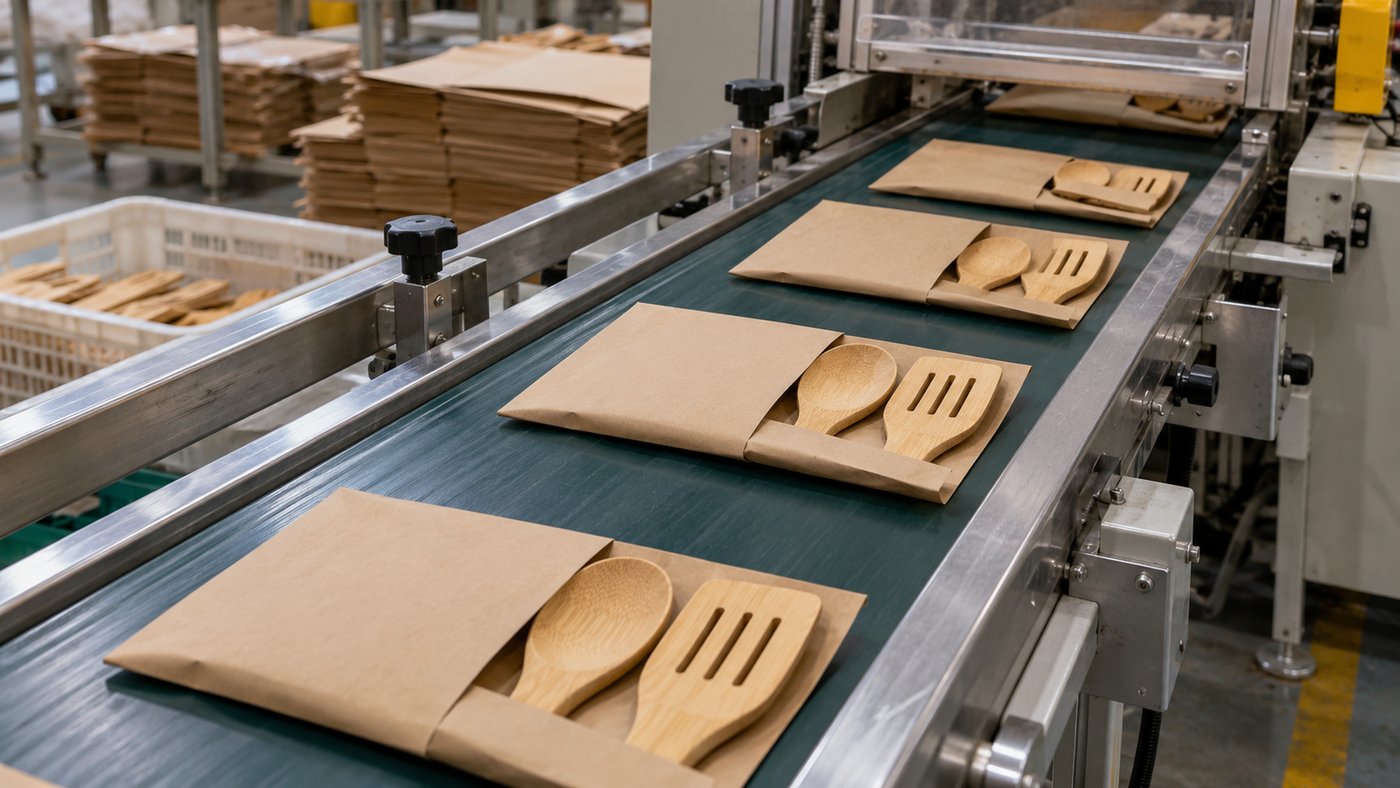
A first shortlist for a kitchenware factory usually keeps the small, light products with a clear gap in reviews and holds back the bulky or crowded ones. Gijae Song, CEO of Amazon Global Selling Vietnam, told The Investor that "Vietnamese products are well received by Amazon buyers, including household items, kitchenware, home decor." The five candidates below belong to an invented factory in that range, scored only to show the method.
| Product | US demand | Gap among top sellers | Room after fees | Size | Overlaps a US buyer | First-wave call |
|---|---|---|---|---|---|---|
| Bamboo utensil set | Steady all year | Reviews complain of cracking and splinters | Good | Small and light | No | Launch |
| Bamboo cutting board trio | Strong | Crowded at low prices | Thin | Small | No | Test only with a clear difference |
| Rattan laundry basket | Seasonal | Few styles with lids | Thin as packed | Bulky | No | Wait for a nesting pack |
| Ceramic dinnerware set | Strong | Breakage complaints | Thin after freight | Heavy | Yes | Leave out |
| Wooden spice rack | Moderate | Few sizes for small kitchens | Good | Flat-pack possible | No | Launch |
In this made-up case, two products go first, one gets a test, one waits for a pack redesign, and the dinnerware stays off Amazon because a US buyer already carries it and the freight eats the margin. Avoiding your buyers' lines is part of every first-wave choice, since an Amazon listing that copies a buyer's product can cost you more in lost orders than it earns.
Score your own long list the same way, one row per product. Keep the products that pass every column and park the rest for later waves.
An Amazon partner can help you choose which products to sell if it starts from your catalog and shows its working for every recommendation. Many firms score niches for private-label sellers who buy from suppliers. You need an assessment of which products you already make can compete in the US.
Ask to see the research behind each recommendation, the top sellers it compared, the review complaints it found and the price left after fees. A good Amazon launch audit puts all of that in a document you keep. Our Amazon launch services begin with exactly this step, before any listing or ad.
Send any partner you're considering two products from your catalog and ask which one they'd launch first, and why. You'll learn quickly whether they read the US shelf or just your price list.
We choose with you which products from your own catalog can compete on Amazon US, reading the top sellers' listings and reviews for the gap each one can fill.
Share your catalog with costs, and the Amazon US Launch Audit will show which products to launch first, at what price and with what packaging, with a P&L for each.
Get Your Amazon US Launch AuditNot necessarily. Low-priced products often leave too little after referral and FBA fees, and they're harder to support with ads. A mid-priced product with a clear advantage over the top sellers usually gives a first launch more room.
You can, but it adds risk to a first launch, since you'll be learning a new production run and a new market at once. It's usually safer to start with products you already make well and adapt the pack or the recipe for US shoppers.
Two to five is a sensible range for most factories. Fewer leaves you exposed if one product stalls, and more spreads the ad budget and your team's attention too thin to learn from the results.
Add products once the first wave has a few months of sales, reviews and fee data behind it. Those numbers tell you which price tiers and features US shoppers reward, which makes the second wave a much safer bet.

Mike Le
Co-Founder, CB/I Digital and Conative AI
Mike Le co-founded CB/I Digital in New York in 2007 and has helped brands grow through search, paid media and data ever since. He started the agency's AI team in 2019 and later started Conative AI. He writes about how customers find and choose brands now that AI answers sit between them and the search results.
Follow Mike on LinkedInCopyright © 2026 CB/I DIGITAL INC. All rights reserved | Privacy Policy