
Published November 2, 2026
Your first container is booked. Half of it is dining chairs and side tables, each in a carton the size of a small suitcase, and the other half is cushions that sell twice as fast. Your forwarder asks where the goods should go when they land, Amazon's warehouses or a third-party warehouse in the US.
That answer sets a large share of your cost per unit for as long as the stock sits in the US. Amazon charges for storage by volume and by time, so a carton that is big and slow can cost more to store than it earns. The right choice is usually different for the chairs and the cushions, and you can work it out before the container sails.
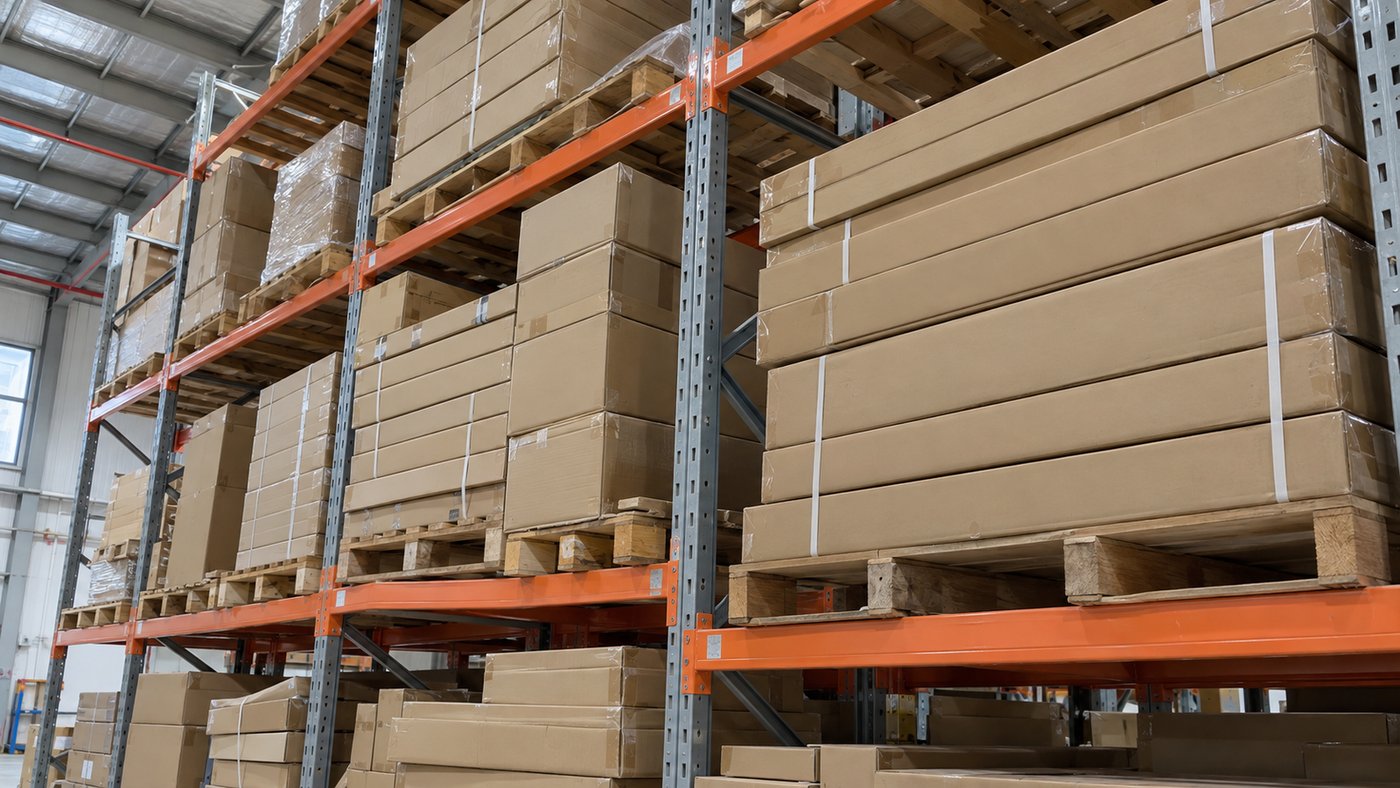
For bulky products, use FBA when the item sells fast enough that it leaves Amazon's warehouse within weeks, and use a US 3PL, a third-party logistics warehouse that stores your stock and ships orders for you, when the item is large and sells slowly. Fulfillment by Amazon, FBA, stores your stock in Amazon's warehouses and ships each order, and your FBA products are eligible for Prime, Amazon's two-day delivery included with membership. A 3PL ships the same order from its own building.
The cost that separates them is space over time. Amazon's FBA page says storage is charged monthly on the daily average volume your inventory occupies in cubic feet, with an extra charge for items stored more than 181 days. A bulky item that waits four months for a buyer pays four months of space.
Nguyen Dung, CEO of the Vietnamese ecommerce firm 5MSTAR, said in June 2024 that furniture makers should stay out of FBA because its storage fees for large, bulky items are "quite high," The Investor reported. Whether FBA works for your product depends on how quickly it sells. Measure the carton of each bulky product in cubic feet and write it next to the units you expect to sell each month.
FBA charges a large item a fulfillment fee for each order, a monthly storage fee for its space and a fee to place your inbound stock across Amazon's network, plus Amazon's referral fee on the sale. Each of these depends on the item's dimensions and weight, so a slightly larger carton can push the same product into a costlier fee tier.
Amazon's page lists the parts. The fulfillment fee covers picking, packing and shipping, as well as customer service and returns. Storage is monthly, by volume. The inbound placement fee covers spreading your stock to warehouses near shoppers and applies to standard and large bulky items. A returns processing fee applies when Amazon covers the customer's return shipping.
Amazon also adds fees when stock runs short or sits too long. In its fee update of 5 December 2023, Amazon announced the inbound placement fee and a low-inventory-level fee for 2024, and said sellers could avoid the second on standard-size products by keeping more than four weeks of inventory relative to sales. For a standard-size item like your cushions, then, you pay a fee if your stock runs too low and pay for storage if it sits too long. Tuoi Tre News reported in June 2024 on a Vietnamese coffee company that had turned to FBA and found its revenue held up while transport and storage costs ran "sky-high."
Fees change every year, and the current rates sit in Seller Central. Before you decide, enter each product's size, weight and price into Amazon's Revenue Calculator and record the fees it shows, with the date you checked.
When a US 3PL ships your Amazon orders, you pay the 3PL for storage, picking and packing, pay a carrier for each delivery, and handle customer service and returns yourself or through the 3PL. Amazon still charges its referral fee on every sale, but not FBA's fulfillment and storage fees.
You gain control over space. A 3PL can hold a full container on pallets, at its own rate, without Amazon's limits or its charges for aged stock. It can also ship orders from Walmart and your own website out of the same stock, which matters if you plan Walmart next to Amazon from the start.
That control has a price. Orders you ship yourself do not carry the Prime eligibility that comes with FBA, so check how many of the top sellers in your niche show Prime before you leave it. You also take on the speed and accuracy of every delivery, and every unhappy customer. Ask any 3PL you consider for its rates per pallet, per order and per return, and for its delivery times to both coasts.
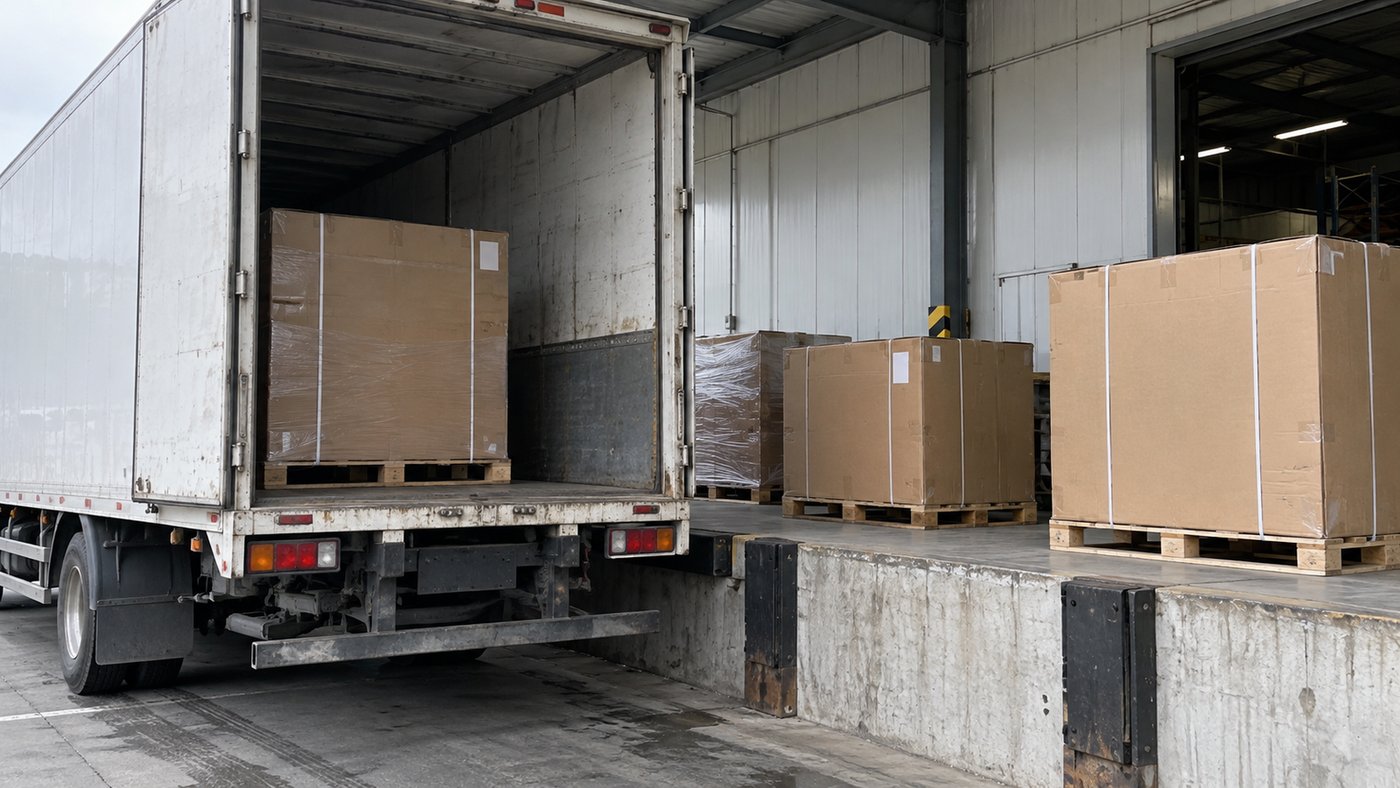
The middle route is to hold most of your stock in cheaper bulk storage and send it into FBA in smaller batches, either through a 3PL or through Amazon Warehousing and Distribution, AWD. You keep Prime eligibility on the units in FBA without paying FBA storage for the whole container.
Amazon describes AWD as bulk storage that distributes your stock to the Amazon store and to other channels, with automatic replenishment into FBA. On 2 November 2026 its page listed base storage of $0.48 to $0.57 per cubic foot a month, depending on region, with no seasonal surcharge. It also says AWD pricing covers FBA inbound placement, and that stock can go to other channels such as Walmart Fulfillment Services.
Here is what that rate means for a bulky item. A 4 cubic foot carton held in AWD at $0.48 costs about $1.92 a month, so six months of waiting adds about $11.50 to that unit before it sells. Run the same sum with your 3PL's pallet rate and with FBA's current storage rate, and compare all three for each bulky product.
You choose for each product by comparing its fulfillment and storage cost per unit under each route at your expected monthly sales, then checking whether losing Prime would cost you more in sales than you save. The answer often splits a single catalog between two routes.
| Question | FBA | US 3PL shipping orders | AWD feeding FBA |
|---|---|---|---|
| Who stores the stock | Amazon, near shoppers | The 3PL, often on pallets | Amazon, in bulk storage |
| Prime eligibility | Yes | Not through FBA | Yes, on units sent into FBA |
| Main cost driver | Size, weight and time in storage | 3PL rates plus carrier cost per order | Storage by cubic foot, plus FBA fees on sale |
| Customer service and returns | Amazon | You or the 3PL | Amazon, once in FBA |
| Suits | Small or fast-selling items | Large, slow or multi-channel items | Bulky items with steady sales |
Storage is only one line in the cost of each unit. Freight and duty arrive before the stock does, so check how US tariffs change your Amazon pricing for the landed cost, and put both into the P&L that shows when a new Amazon US brand breaks even.
Our Amazon launch services plan this route as part of each product's P&L, because the same chair can earn or lose money depending only on where it waits for a buyer. Repacking can change the answer too. A carton redesigned to ship flat, or two units packed as one, may drop a product into a smaller size tier and cut both fulfillment and storage.
Then make the call product by product. Put your three or four bulkiest items through the comparison first, since they carry most of the risk, and agree the fulfillment route for each before you book the next container.
We are one team in the US and Vietnam that plans and runs Amazon US launches for manufacturers, with fees, storage and stock timed to sea freight in each product's P&L.
Send us your catalog with carton sizes and costs, and the audit shows the fees, the price and the break-even month for each product you plan to launch. Whatever you decide, the audit stays with you.
Get Your Amazon US Launch AuditYes, the route is chosen listing by listing. A sensible first split puts small, quick-selling items into Amazon's warehouses and keeps large furniture or seasonal lines with the 3PL until their sales justify the move.
It helps if you plan to send replenishment shipments into FBA, because shorter trucking cuts cost and time. For orders shipped straight to shoppers, a location that reaches most of the US within a few days matters more.
Amazon can return, dispose of or liquidate it for a charge per item, and stock kept past six months adds an aged inventory charge. Plan a cut-off for each slow product, and move the units to a 3PL or a sale before those charges eat the margin.

Mike Le
Co-Founder, CB/I Digital and Conative AI
Mike Le co-founded CB/I Digital in New York in 2007 and has helped brands grow through search, paid media and data ever since. He started the agency's AI team in 2019 and later started Conative AI. He writes about how customers find and choose brands now that AI answers sit between them and the search results.
Follow Mike on LinkedInCopyright © 2026 CB/I DIGITAL INC. All rights reserved | Privacy Policy