
Published November 2, 2026
Your export manager forwards an email from a US buyer. The buyer wants you to share the new duty on next season's order, again. You have already planned to put a few of the same products on Amazon US under your own brand, and you are wondering what the tariff does to that plan.
It changes more than you might think. When you sell FOB, handing the goods over to your US buyer once they are loaded at your port, the buyer usually imports them and pays the duty. When you sell to US shoppers on Amazon, the duty becomes your cost, and you must recover it through your selling price. The way through is to price each product from its landed cost, test that price against the shelf, and plan for the rate to move.
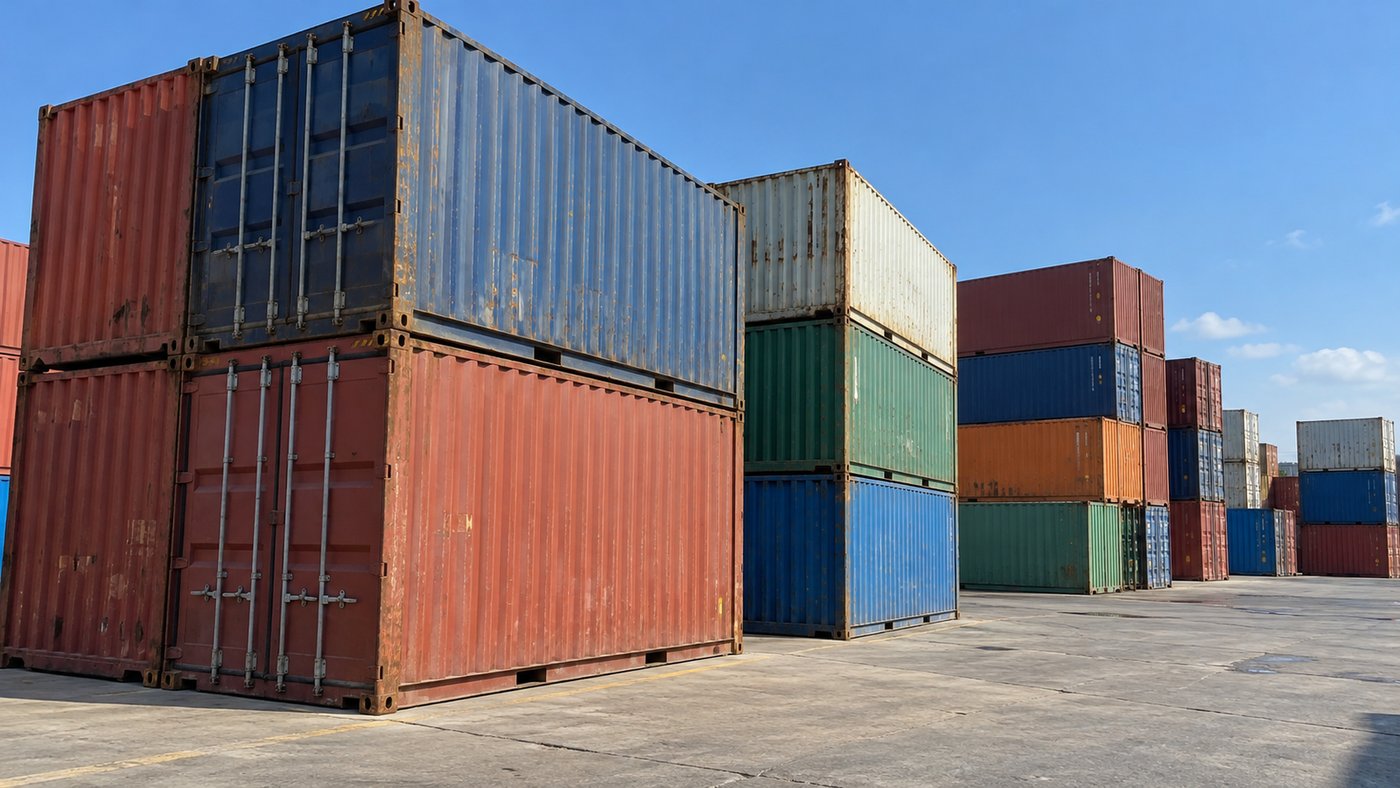
US tariffs raise your Amazon US price floor because the duty is paid on every unit before it reaches Amazon's warehouse, and Amazon's fees are then charged on the higher price you need. The duty goes into your landed cost, the cost of a unit delivered to the US, and you set the shelf price on top of that.
On 2 November 2026 we read the current rates in the Federal Register. A Section 301 notice from the US Trade Representative, effective 24 July 2026, adds a 12.5% duty on most products of Vietnam and 10% on most products of Pakistan. The same notice puts Thailand and the Philippines at 12.5% and Indonesia, Malaysia and Cambodia at 10%, with exemptions listed in its annexes.
These are additional duties. They sit on top of the regular duty for your product's tariff code, which can be zero or can be more than the Section 301 rate itself.
Your B2B buyers already feel this. In April 2025, Nukta reported that major US retailers asked Pakistani textile exporters to absorb at least half of the new tariffs, and the patron of the Pakistan Hosiery Manufacturers Association warned of "significant losses for our industry." On Amazon, there is no buyer to share the duty with. Write down your product's full rate, regular duty plus Section 301, before you look at any price.
US tariff rates change because they come from presidential actions and trade agreements that can be replaced, challenged in court or renegotiated within months. A rate you priced in spring may not be the rate on the day your container clears.
The extra duty on goods from Vietnam changed twice in 2026 alone. On 20 February 2026, an executive order ended the extra duties imposed under emergency powers, including the reciprocal tariffs of 2025, and Proclamation 11012 put a temporary 10% surcharge on imports, with exceptions, for 150 days from 24 February. That surcharge ran until 24 July, the day the Section 301 duties above took effect.
Some product groups follow their own rules. Certain upholstered wooden products, kitchen cabinets and vanities carry a 25% tariff under Section 232, a separate national security law. Proclamation 11000, published on 9 January 2026, pushed the planned increases back a year, so from 1 January 2027 the rate is set to rise to 30% on the upholstered products and 50% on cabinets and vanities, except for countries that reach an agreement with the US.
The July notice lists wood products under the Section 232 tariff headings among its exemptions, and Holland & Knight, a law firm, reads it as exempting goods already subject to Section 232. For a furniture maker, that means the 232 rate may be the one that counts, so ask your broker which heading your product enters under.
Timing matters as much as the rate. The duty that applies is the one in force when your goods are entered for consumption, not when you placed the order. Ask your customs broker for the 10-digit tariff code of each product, the full rate that applies to it today and any change already announced for the months your stock will be at sea.
Landed cost for one unit is the customs value of the product plus duty, freight, insurance, customs fees and the cost of getting it into Amazon's warehouse, divided across the units in the shipment. Duty is worked out on the customs value, not on your Amazon price.
US law defines that value as the price actually paid or payable for the goods, which leaves out international freight and insurance but adds items such as packing and certain commissions or royalties. When your factory ships its own goods to its own Amazon account, there is no ordinary sale to a US buyer to start from, so the value to declare is a question for your broker.
The party named as importer of record files the declared value, classification and rate of duty and has to use reasonable care in doing so. With no US buyer in the chain, that role falls to you or to a company acting for you.
Customs also charges a merchandise processing fee of 0.3464% of value per formal entry. For the fiscal year that began on 1 October 2026, CBP's fee notice sets the minimum at $34.58 and the maximum at $670.86 per entry, so on a small first shipment the minimum can weigh more than you expect.
Here is a simple example with round numbers, not a quote for your product. Take a unit with a customs value of $8.00, a regular duty of 6% and the 12.5% Section 301 duty.
At a full rate of 18.5%, that unit pays $1.48 in duty. Now add sea freight, insurance, the broker's fee, the processing fee and inland trucking, and divide by the units in the container. Run this sum for each product you plan to launch before you set a single price.
Whether you raise the price or absorb the tariff depends on where your product sits among the prices on page one of its niche, and on the margin left after Amazon's fees at each price. Neither answer is right for every product.
The fees change the arithmetic. Amazon's referral fee is a percentage of the price the shopper pays, 15% in most categories and lower in a few, such as grocery items at low prices. Because the fee rises with the price, a $1.00 increase in duty needs about $1.18 more on the shelf at a 15% fee before you keep the same margin in dollars.
A higher price can also move your product into a different tier against the top sellers, where shoppers compare it with other brands. Sometimes absorbing part of the duty and keeping the price under a threshold earns more over a year than passing all of it on.
So before you decide, list the prices of the top sellers in your niche and mark where your new price would land. If it lands above the brands with the most reviews, ask what your listing offers that justifies the gap.
You plan a launch around moving tariff rates by building the P&L, the profit and loss plan for each product, with several duty scenarios and a clear rule for when to reprice. A single rate in a spreadsheet gives you false comfort.
Build three cases for each product. One uses today's rate, one adds five percentage points and one takes the rate back to the regular duty alone. Each case shows the price, the margin after Amazon's fees and ads, and the month the product breaks even. Our guide to when a new Amazon US brand breaks even shows how those lines fit together.
Duty also interacts with storage. Stock that waits months in a warehouse has paid its duty in full and keeps costing money, so the choice between FBA and a US 3PL, Amazon's warehouses or a third-party one, belongs in the same sum.
Then set your trigger in advance. Decide which change in the rate would make you reprice, which would make you hold the next shipment, and which product you would stop. Write those three numbers into your plan now, while nothing is urgent. If you want the cases built for your catalog, our Amazon launch services start with that P&L work.
We are one team in the US and Vietnam that helps manufacturers already exporting to US buyers launch their own brand on Amazon US, with landed cost, fees and duty planned per product.
Send us your catalog with FOB costs, and the audit shows which products still earn on Amazon US at today's duty, at what price and from which month. You keep the document whether or not you work with us.
Get Your Amazon US Launch AuditThe importer of record named on the customs entry. Amazon's published selling and fulfillment fees do not include customs duty, so settle who acts as importer with your broker or forwarder before the container leaves port.
No. Customs works from the value of the goods at the point of export, adjusted by a few items the law lists. Your shelf price on Amazon plays no part in that calculation, though it decides how much of the duty your margin can carry.
The US International Trade Commission publishes the Harmonized Tariff Schedule online, and the Federal Register carries each new action. Rates change often and several layers can apply to one product, so ask a licensed customs broker to confirm the full rate on the date you ship.
No. Classification is your importer's legal responsibility and a job for a licensed customs broker. We take the code and rate your broker confirms and show what they mean for price, margin and break-even in your P&L.

Mike Le
Co-Founder, CB/I Digital and Conative AI
Mike Le co-founded CB/I Digital in New York in 2007 and has helped brands grow through search, paid media and data ever since. He started the agency's AI team in 2019 and later started Conative AI. He writes about how customers find and choose brands now that AI answers sit between them and the search results.
Follow Mike on LinkedInCopyright © 2026 CB/I DIGITAL INC. All rights reserved | Privacy Policy