
Published November 11, 2026
Scroll to the bottom of your treatment menu, past the neurotoxin, the filler, the laser packages and the facials, and there it is under "other services", one line that says IV drips. No page of its own, no photo, no explanation of what's in each bag or how long a visit takes.
Patients who would book a drip with you can't find it, so they book with the mobile IV company whose ad shows up first, or the drip bar a few blocks away. You already pay for the room, the chair, the nurse and a medical director. If patients can't find your IV service, those resources won't bring in IV bookings.
Market IV as its own line. Give each drip a page, give IV its own campaigns and its own numbers, offer it first to the patients already on your books, and hold every word to the same health-claim checks you use for injectables.
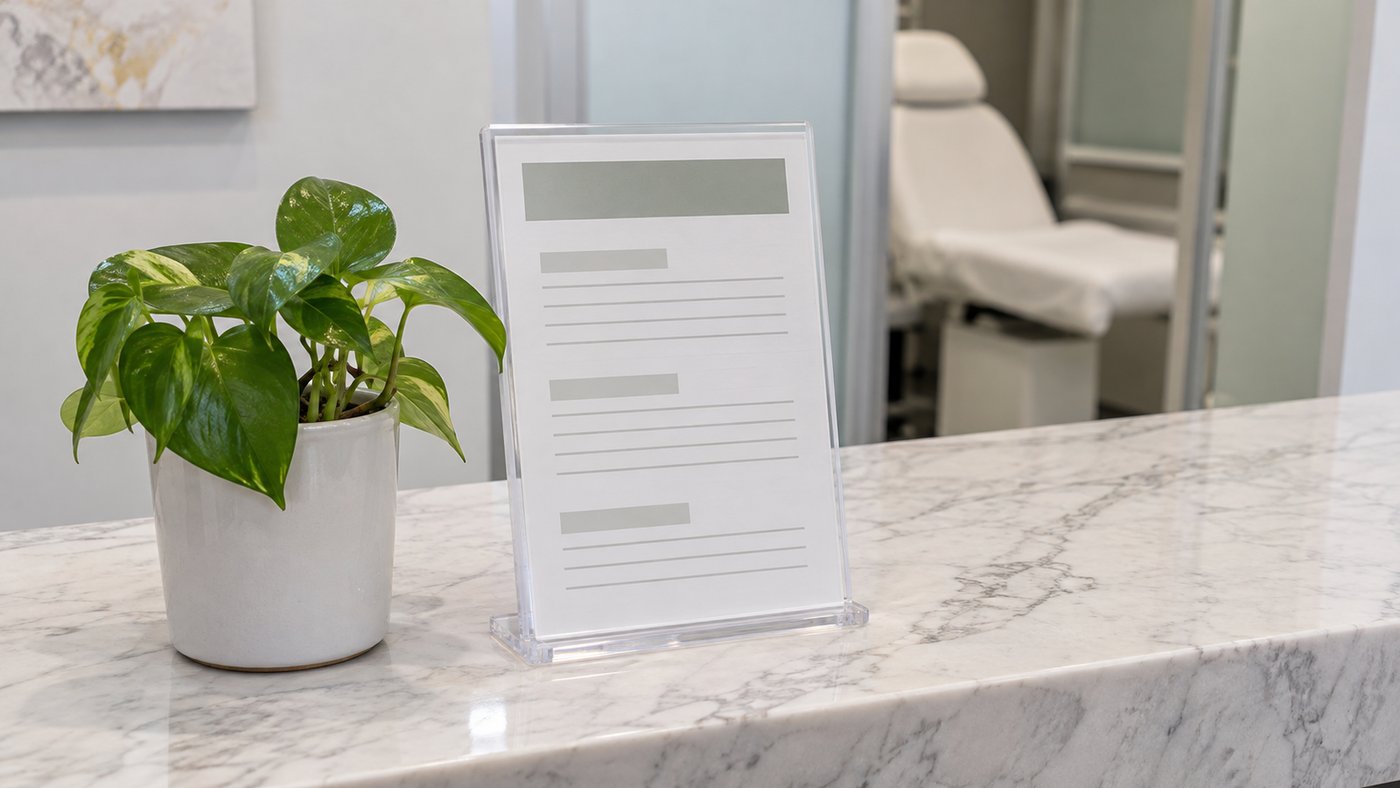
Market IV drips alongside injectables and laser as a separate line, with its own pages, ads and reporting, and sell it first to the patients you already see. Folding IV into your general med spa marketing sounds efficient, but it hides the numbers you need to decide whether IV is worth the chair time.
A patient shopping for a drip can compare menus, prices and the next open slot in a few taps on a phone, often close to the day she wants it. Your IV pages and ads should answer those questions on the first screen, with a booking button one tap away.
Location counts for more than a menu suggests. A patient looking for IV near her sees map results first, which is why digital marketing for IV therapy businesses starts with the few miles around each location, where people pick a clinic they can reach. Your Google Business Profile should list each drip as a service, with your hours and reviews, so you show up when someone nearby searches. If you run more than one location, give each its own profile and its own page, since patients choose the one they can reach.
Ask your front desk how many patients asked about IV last month, then check whether your site gave each of them a page to book from.
The IV treatments that can carry their own ad costs are the ones whose margin per visit is bigger than what it costs you to win a completed visit. Your cost per appointment, meaning ad spend divided by the visits it booked, has to sit below what the drip leaves you after the nurse's time and the supplies.
That's why IV needs its own campaigns. When IV and injectables share a campaign or a report, the bigger ticket of an injectable visit can hide an IV campaign that loses money on every booking. Split them, and you'll see what each drip costs to sell on its own.
Not every drip on your menu needs an ad. The treatments with thin margins can still earn their place when you offer them to patients who are already coming in, at no extra ad cost. Advertise the drips that pay for their clicks, and sell the rest at the front desk and in your messages.
Write the margin of each drip next to its cost per completed visit, and pause ads on any drip where the second number is bigger.
An IV treatment page on a med spa site should describe the drip, list what's in it as your medical director approves it, say how long the visit takes, who gives it and what it costs, and put the booking button within one tap. That's everything a patient needs to book, and none of it is a health claim.
Order matters on a phone screen. Put the price, the visit length and who gives the drip above the fold, with the booking button beside them, and let the ingredient list sit just below for the patients who want to compare. If your injectables pages already follow a template, reuse it, so a patient moving between the two parts of your menu finds things in the same place.
Claims are where IV pages get into trouble, and the FTC has acted against an IV therapy marketer's health claims before. What Google, Meta and the FTC expect from IV ads and pages is covered in running IV ads within Google and Meta rules.
If your injectables pages already go through review, put every IV page through the same review before it goes live, with your medical director approving any health claim and your attorney confirming what your state allows.
Open your current IV page and highlight every sentence that says what a drip does for the body. Send those lines to your medical director before you change anything else.
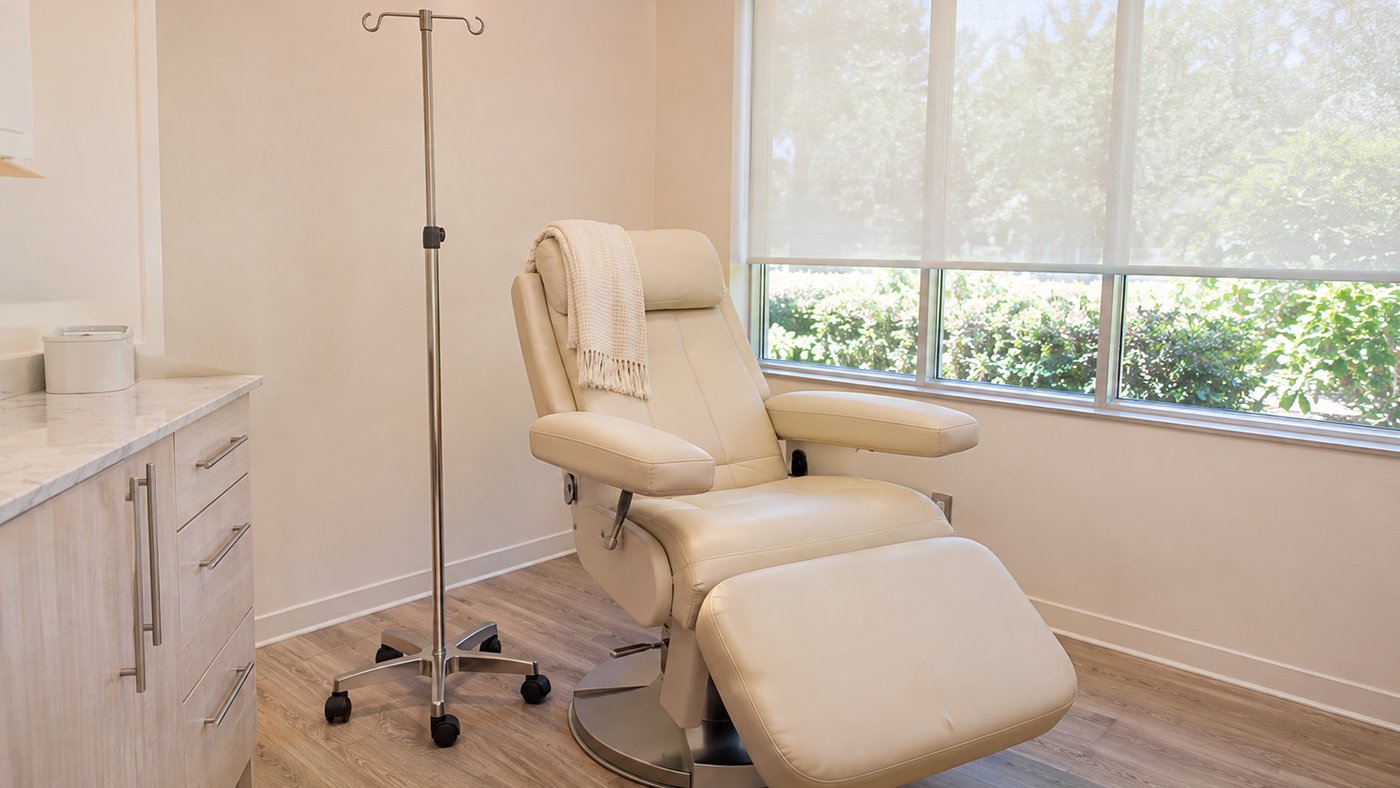
You sell IV to patients who already come for injectables through the booking confirmation, the front desk, and email and SMS built from their visit history. They already trust your nurses and know where to park, so the only thing missing is a reason to add a drip to a visit they've planned.
Keep the offer about the visit itself. A drip slot right after a booked appointment, a weekend opening, or a new drip on the menu is a message you can send. A line suggesting a drip improves the results of another treatment is a health claim, and it goes to your medical director first or not at all.
Time matters too. Patients on a regular injectable schedule have gaps between visits, and those gaps are where a well-timed message can bring them back for something else. The same flows that drive getting patients to rebook work in a med spa, as long as every send has a person's approval.
Add an IV option to your booking confirmation for injectable visits, and count how many patients take it in the first month.
IV should usually join the membership you already run, with credits a member can use across services, as long as your booking system can track which service each credit went to. One membership is easier for patients to understand and for your front desk to sell than two that compete for the same monthly budget.
A separate IV membership makes sense when your IV patients are a different group who rarely book anything else. Your booking data will tell you which case you're in. Either way, which treatments a plan covers, and how often, is your medical director's call, and your attorney reviews the renewal and cancellation terms.
Whatever you choose, track IV inside the membership on its own. If members never use their IV credits, the offer isn't working, however many sign-ups it brings.
Pull a list of patients who booked both IV and another service in the last six months, and use it to decide which membership you build.
If patients come to your med spa, the same strategist, AI agents and health ad checks that run our mobile IV work run your marketing, and we track every booking to the paid treatment so IV shows its own results next to injectables.
For med spas and clinics with several locations, the audit looks at each location's presence on Google, Maps and AI answers, the path from booking to paid treatment, and your ads against health ad rules. A reply comes within 1 business day, and the audit itself within 10 business days after we can see your accounts.
Get Your Mobile IV Growth AuditIt's better to keep them apart. Separate campaigns let you set a budget for each, write ads that match what each patient searched, and see which one pays for its clicks. A shared campaign mixes their costs and makes it hard to tell which one is losing money.
Yes. Listing the ingredients your medical director has approved helps patients compare drips. Stop short of saying what those ingredients do for the body, and have any wording that hints at an effect checked before it goes live.
Usually not. A page for each drip on your existing site, linked from your menu and your Google Business Profile, keeps patients in one place and lets them book IV and other treatments together.
Your medical director approves anything that touches a health claim, and your practice manager or owner approves offers and prices. Put both steps in writing so a promotion never goes out with only one of them signed off.

Mike Le
Co-Founder, CB/I Digital and Conative AI
Mike Le co-founded CB/I Digital in New York in 2007 and has helped brands grow through search, paid media and data ever since. He started the agency's AI team in 2019 and later started Conative AI. He writes about how customers find and choose brands now that AI answers sit between them and the search results.
Follow Mike on LinkedInCopyright © 2026 CB/I DIGITAL INC. All rights reserved | Privacy Policy