
Published October 27, 2026 · Updated October 28, 2026
If your Shopify store sells to shoppers in the US, Canada or Australia, a checkout setting you may never have touched is probably already on. Shopify turns on direct checkout in Google AI Mode and Gemini by default for eligible stores, and while "Allow Shopify to manage for me" stays on, it enrolls your store in new AI channels automatically.
So the decision has often been made for you. Know what it changes for your customer data, your attribution and your retention program before you leave it on or switch it off. Platform details here are as of 28 October 2026.
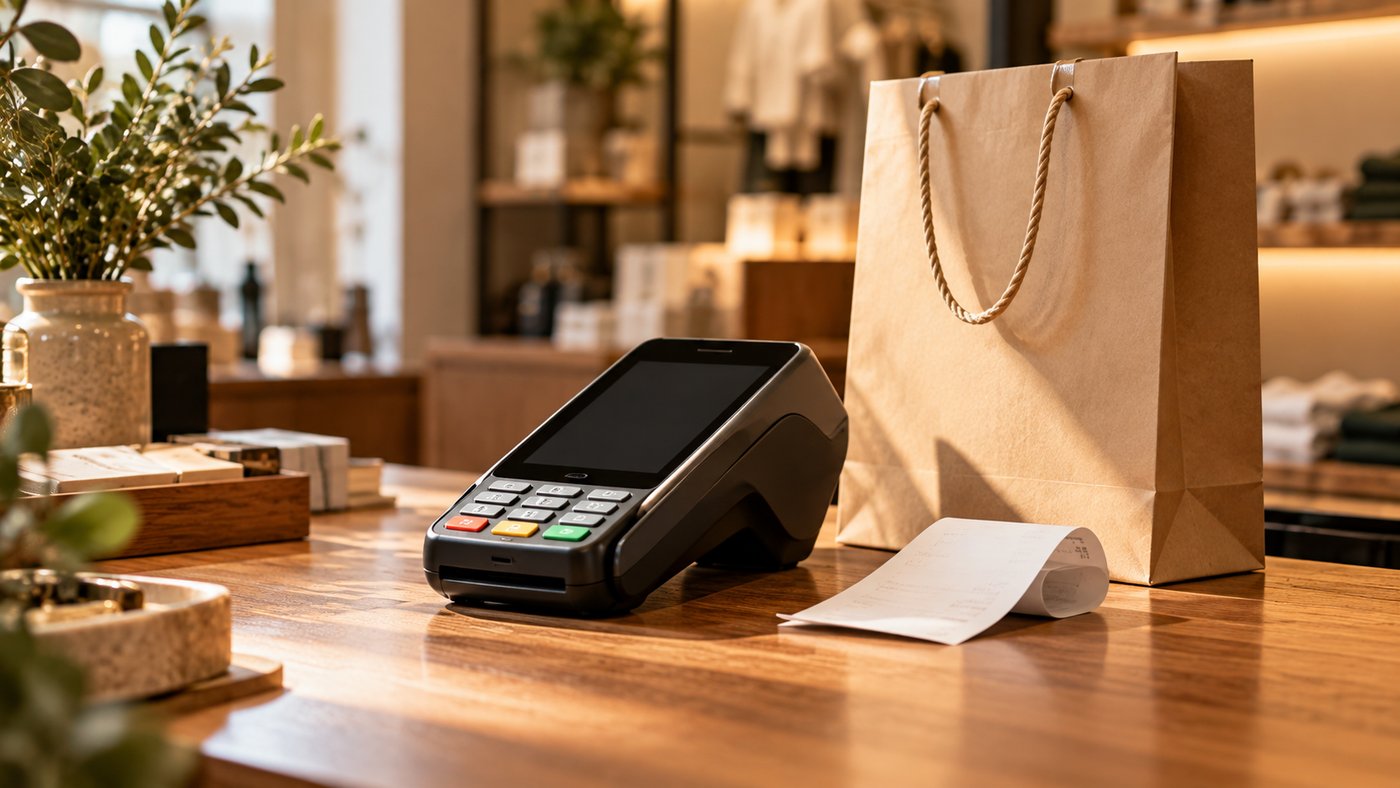
When shoppers buy inside Google AI Mode or Gemini, the brand stays merchant of record and receives the order details but browser-based analytics stop seeing the purchase, while ChatGPT changes little because its buyers finish on the brand's own checkout.
Google is plain on the first point. Its UCP FAQ says you're the merchant of record and keep ownership of your customer relationships and data, and that your terms and conditions cover the purchase as if the customer had checked out on your own site.
The order reaches you in full. It lands in your Shopify admin with its channel attribution, while the AI channel itself, Shopify says, gets the customer's name, email, phone number and address for that order but not your full order history.
Analytics is where the gap opens. Shopify's help page for Google AI Mode and Gemini, which also confirms direct checkout is on by default, states that Google Analytics and custom pixels don't fire in Google AI Mode and Gemini's direct checkout, and that only server-to-server events for checkout started and completed are sent. GA4 and your ad platforms will undercount these sales, so plan on reconciling Shopify and GA4 for these orders every month.
Because every one of these orders still reaches your admin, Shopify, not GA4, becomes your source of truth for AI checkout revenue.
ChatGPT avoids most of this. Its buyers finish on your own checkout inside an in-app browser, after OpenAI scaled back Instant Checkout in March 2026, as Modern Retail reported. Shopify doesn't document how pixels behave inside that in-app browser, so test a purchase and check your own data.
Having a customer's email isn't the same as being allowed to market to it. Google's UCP FAQ describes a marketing opt-in at checkout as a planned feature and says standard privacy and consent practices apply. Treat these buyers as non-subscribers until the consent signal is clear, and have your counsel review the current terms before you build flows for them.
Loyalty is the other gap. In January 2026, Brooklinen's COO told Modern Retail she wants to know who's new and who's a repeat customer, and Everlane's CFO said the company wants to "understand the person behind the click." Modern Retail noted then that native AI checkout couldn't yet link loyalty programs or award points.
Google's March 2026 protocol update added identity linking, so logged-in shoppers can keep member perks, but it depends on your platform supporting it, so ask yours before you promise members their perks in AI Mode.

A DTC brand should test native checkout in Google AI Mode and Gemini rather than leave it on or off by default, measuring orders, new customers and repeat rate in Shopify against the same products bought on the site.
The case for leaving it on is reach. Your shopper buys where she already is, and you still own the order, the fulfillment and the post-purchase experience.
The case for caution is follow-up. Pixels don't fire, marketing consent waits on Google's planned opt-in, and loyalty linking isn't automatic, so if you lean on email and SMS for repeat purchases, you get less from each of these orders.
There's one data point on in-chat checkout, and it's narrow. Walmart's Daniel Danker told WIRED that purchases inside ChatGPT's old single-item Instant Checkout converted at about a third of the rate of click-outs to Walmart's site, as PPC Land reported. OpenAI has since scaled that flow back, and the figure says nothing direct about Google's checkout.
Some of your products can't use these checkouts anyway. Copilot's direct checkout doesn't support subscriptions, bundles, customizable products or required sign-in, Shopify's Google checkout has the same product limits, and Google's rules for direct integrators also exclude pre-orders, personalized goods and final-sale items.
Here's a practical setup for a test.
Pair the test with the wider reporting, and read up on the protocols behind these checkouts if your platform team asks how they work.
We are a performance marketing and AI search agency with analytics in the same team as search, so an order placed inside an AI assistant is tracked by the people who set up the channel.
Get a clear picture of where your store is losing revenue, what to stop now and which actions to take first with our DTC Growth Audit.
DTC Growth AuditYes. Shopify lets a store turn off direct checkout in Google's AI surfaces while your products stay discoverable, in which case shoppers are sent to the store to buy.
Yes. Shopify tags each AI channel order with the channel or referrer that sent it, which makes Shopify the most complete record of these sales.
No. What's here summarizes Google's and Shopify's published terms as of 28 October 2026. Ask counsel to review the current terms before emailing customers who bought through an AI checkout.

Mike Le
Co-Founder, CB/I Digital and Conative AI
Mike Le co-founded CB/I Digital in New York in 2007 and has helped brands grow through search, paid media and data ever since. He started the agency's AI team in 2019 and later started Conative AI. He writes about how customers find and choose brands now that AI answers sit between them and the search results.
Follow Mike on LinkedInCopyright © 2026 CB/I DIGITAL INC. All rights reserved | Privacy Policy